Making History Feel Less Like Homework
This deep into my career I’ve written hundreds of articles — for magazines, websites, social media, even a Pulitzer Prize–winning newspaper during a stint in the U.S. Virgin Islands. Below are links to Recent Work followed by a sample of the articles I wrote for Military History and Wild West, published by HistoryNet, the world’s largest history magazine publisher.
RECENT WORK
After the HistoryNet titles ceased publication in 2024 after a 50-year run, a publisher hired me to launch a new history magazine centered on the American West. When economic uncertainty put that project on hold, I took up freelancing for HistoryNet’s ostensible archrival — namely, History.com, the online presence of A+E Global Media’s History Channel. Truth be told, history publishing is a cozy niche. Several HistoryNet writers were already writing for History.com, and my new editor even expressed regret at the loss of HistoryNet. I’ve also contributed to several local nonprofits, including the Harpers Ferry Highland Games, for which I wrote the primer below that explains each athletic event for spectators.

Highland Games Heavy Events 101
By David Lauterborn
Harpers Ferry Highland Games, October 2026
If you’re unfamiliar with the athletic “heavy events” of the Highland Games, you’re not alone. Before joining the volunteer ranks of the Harpers Ferry Highland Games in 2025, I had only been to one other Highland Games. While I’d enjoyed the spectacle of musclebound men and women in kilts hurling heavy objects great distances, I was foggy on the finer points of footwork and scoring. Even after serving as the event photographer at Harpers Ferry in 2025, I was suitably impressed but still not entirely clear about what I’d just witnessed. And that bothered me.
So, in advance of the 2026 Harpers Ferry Highland Games I put together the primer at left, which describes each event, the implements used and the techniques employed by competitors. Rob Rash, a friend and former coworker of my wife, Jill, designed the primer using the HFHG logo and stylized photographs I took of athletes in action at the 2025 games.
When I shared it with the director of Mid-Atlantic Scottish Athletics, the regional governing body of the games, she was delighted and asked if we could create a version designed for her organization. We were happy to.
HISTORYNET
Below are standout pieces from my two-decade tenure with Wild West and Military History, subdivided into categories — Features, Interviews, Biographical Sketches, Editorials, Online Newsletters and Back Pages — to demonstrate what I have done and can do across all media. To see additional samples of my work, visit my author page at HistoryNet.com.
Features
By David Lauterborn
Military History, September 2015
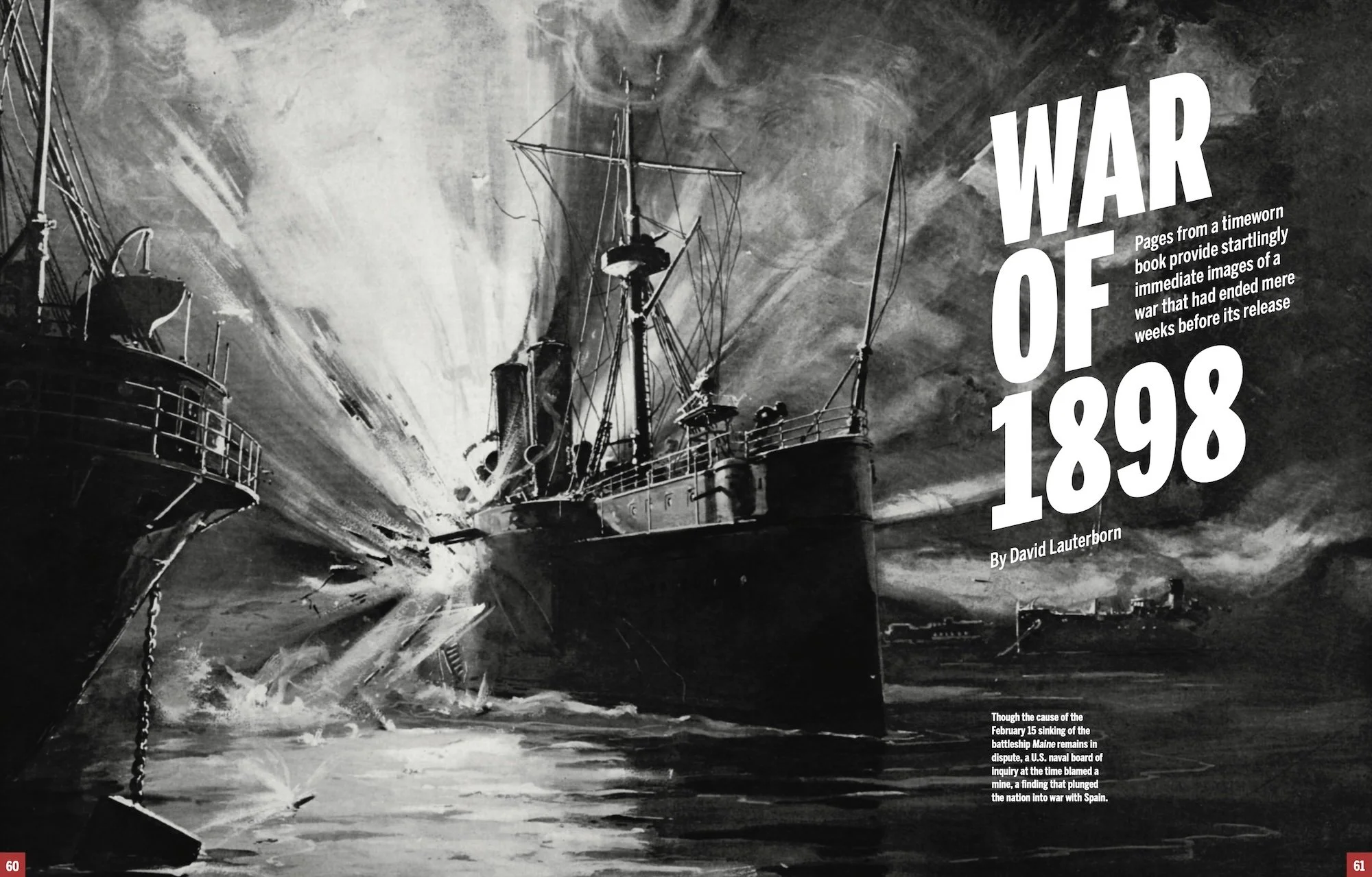
The best-remembered stories include surprises. This one had its origins in a timeworn volume I found in a favorite antique shop. “Never judge a book by its cover,” goes the old trope, and that held true for this relic, its crumbling binding hanging on by a strip of silver duct tape. It was the faded title that caught my eye:
THE STORY OF THE WAR OF 1898
Contained within its covers were gripping firsthand accounts and priceless color-plate illustrations of a 109-day conflict that in the years that followed became known as the Spanish-American War.
When I brought the book into the office, my coworkers instantly recognized its value, and the resulting portfolio gave readers a contemporary look at a conflict with ramifications to the present.
‘War of 1898’
By Dave Lauterborn
Wild West, Winter 2024
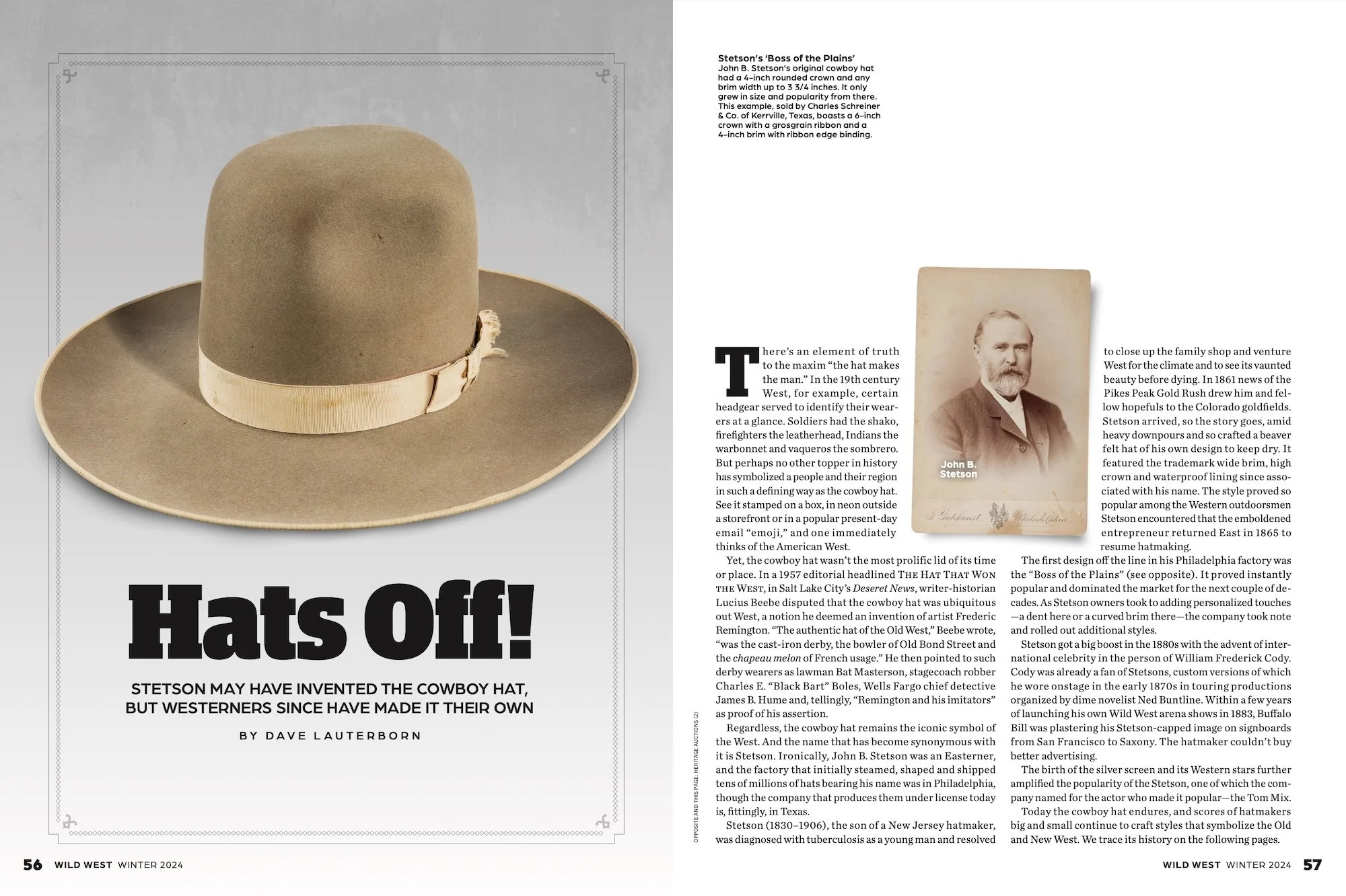
Right up front, I openly confess an addiction to hats. Scores of every description hang from racks and display stands, crowd out dresser drawers and cap the bookshelves of our closet-challenged Shenandoah foothills cabin. So, when it came time for this editor to choose and write a feature portfolio for the Winter 2024 issue, it was no contest.
The resulting feature highlights pioneering hatmaker John B. Stetson, who, it turns out, hailed from the East and launched his famed eponymous enterprise in Philadelphia. But the Stetson endures, thanks in part to Buffalo Bill Cody and other notable figures of the real and “reel” West who popularized this all-American original of hats.
‘Hats Off!’
‘How Frontier Scouts Helped
Settle the American West’
By David Lauterborn
History.com, August 2026
One perk of working for a general-interest media outlet is the freedom to write about any topic with which one is familiar. Having concurrently edited Wild West and, particularly, Military History for nearly 20 years, my familiarity with history spans most eras and regions of the world.
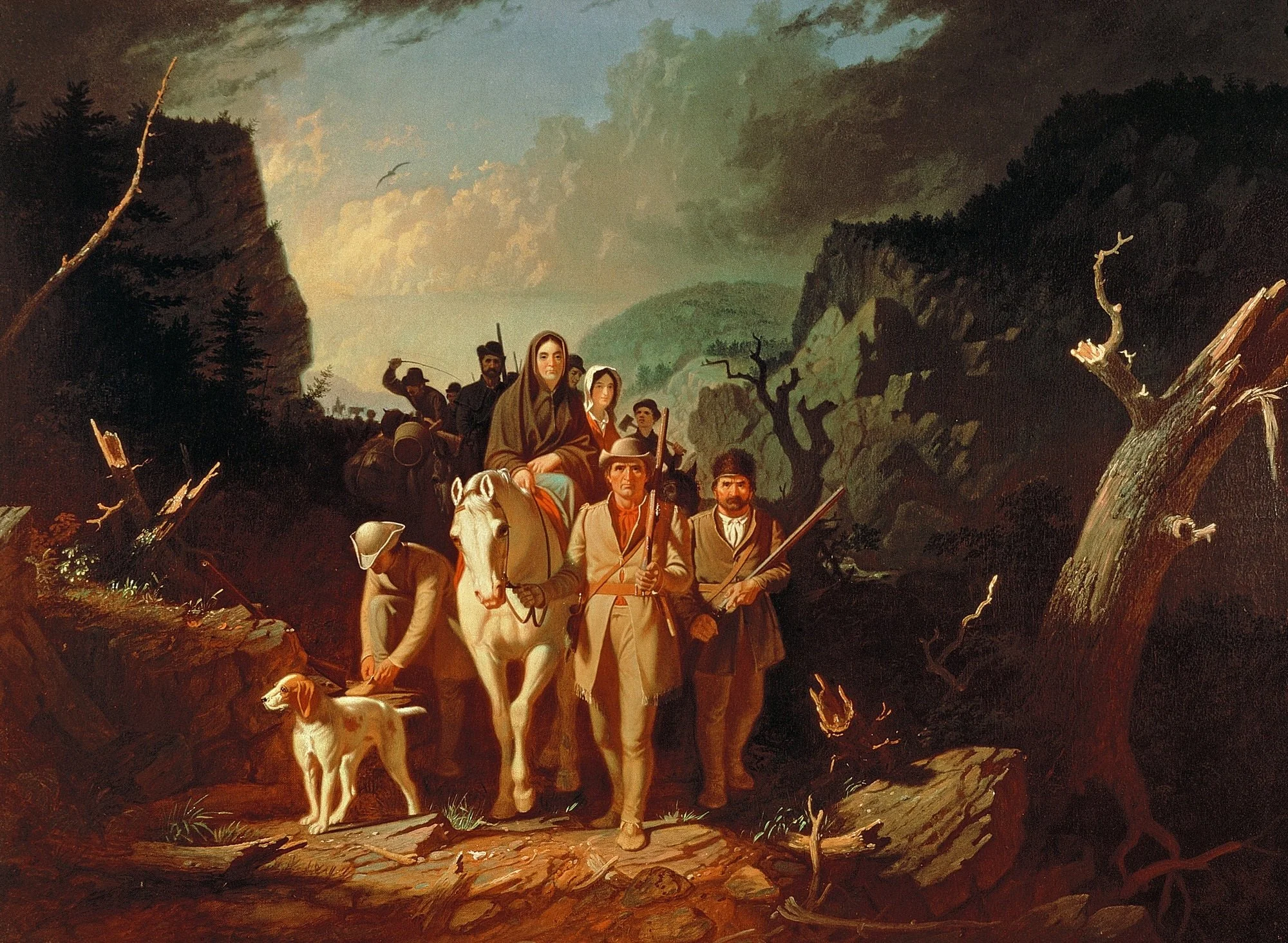
My latest article relates the necessary skills of the remarkable scouts who blazed trails into the great unmapped American West during the frontier era — hardy souls like Daniel Boone, who led settlers along his Wilderness Road through the Cumberland Gap into Kentucky, and Jedediah Smith, who navigated the Sierra Nevada to open California.
Inevitably, amid the wrangling with one’s editor over word counts, something winds up on the cutting-room floor. This time it was famed scout John Colter, who survived a literal run for his life from hostile Blackfeet in 1809. Happily, my editor was able to add Colter back into the mix in the form of a video — another perk of writing for History.com.
Biographical Sketches

By Dave Lauterborn
Wild West, Summer 2023
Each issue of Wild West included a one-page, staff-written biographical sketch titled simply Westerners. The only qualification we used for whom to profile was whether the subject had led an interesting life or done something out of the ordinary.
Dancer and vaudeville star Kathleen Eloise Rockwell (1880–1957) certainly fit the bill for our Summer 2023 issue, which centered on the 1896–98 Klondike Gold Rush. Among the few women to brave the rough-and-tumble goldfields, “Klondike Kate” arrived in Dawson City, Yukon Territory, in the immediate wake of the rush to beguile miners with risqué stage performances, making far more in tips than the average digger took from the ground.
This dreamy photo of her led us to the discovery of her stage career. For the layout, we photoshopped her portrait into, appropriately enough, a gold Victorian frame. Time for your closeup, Kate.
‘Flower of the North’
By Dave Lauterborn
Wild West, Spring 2024
The Spring 2024 issue was the swan song for Wild West — indeed, for all nine HistoryNet magazines. It was my privilege to have worked on the title for 17 of its 36 years, and this was about as perfect an issue on which we could hope to end. The cover story related Buffalo Bill Cody’s 1890 and 1906 tours of Italy, and most other features and departments dovetailed with the overall theme of Western entertainment in arenas, onstage and on-screen.
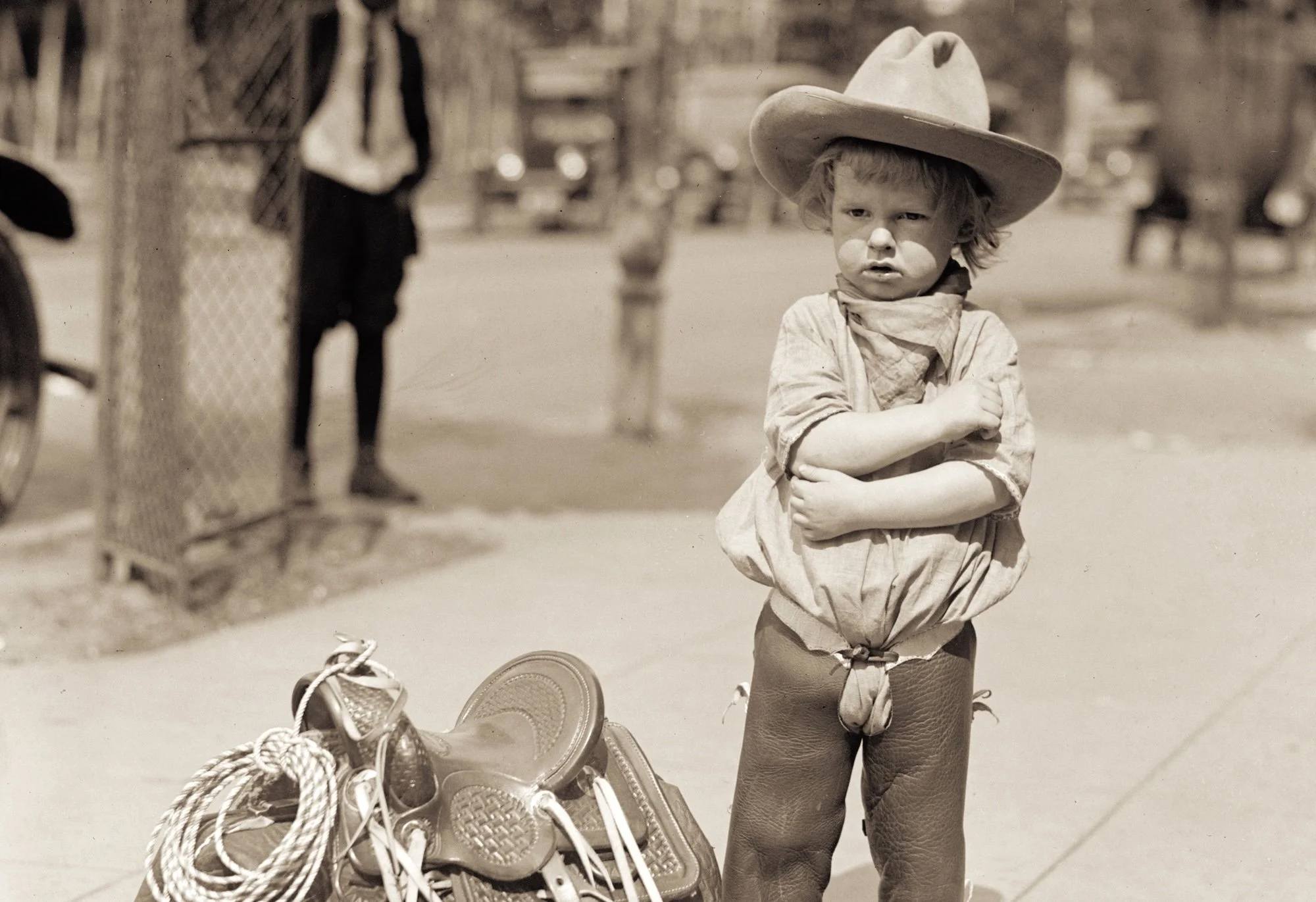
The willful-looking tyke pictured is 2 ½-year-old John “Fog Horn Jr.” Clancy, the performing son of rodeo announcer and promoter Frederick Clancy. Finding the photo in the archive of the Library of Congress was one of those happy discoveries that allowed us to reintroduce people forgotten to time. Such stories are what drove us as a publishing team and intrigued our readers.
What a kick it was to usher out Fog Horn Jr. for an encore.
‘Chapped’
Interviews
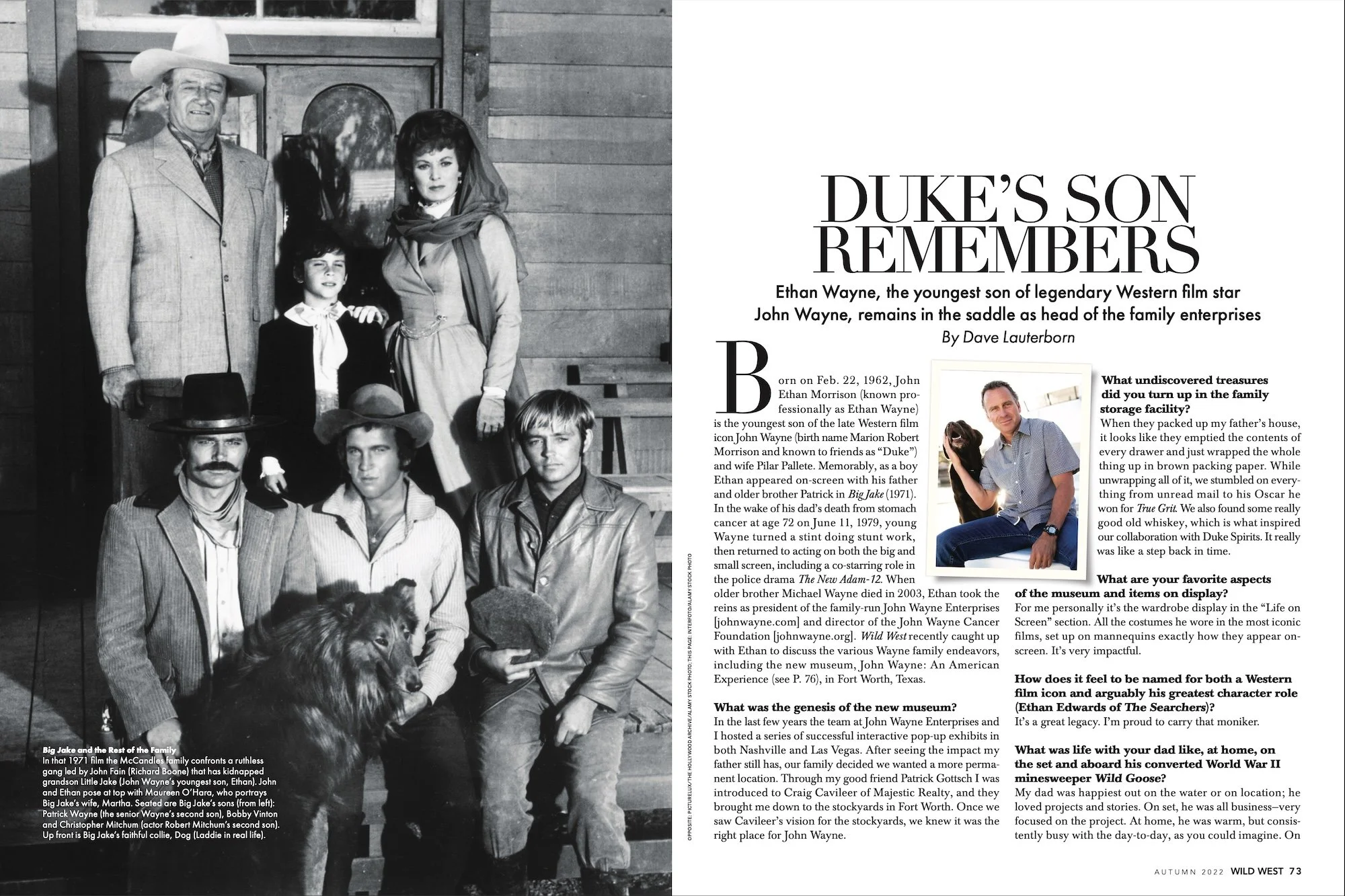
By Dave Lauterborn
Wild West, Autumn 2022
For Americans of a certain age, memories of childhood Saturdays revolve around cartoons and Western matinees, the latter dominated by John Wayne. So, it was perhaps inevitable when I entered the Western history niche, I’d encounter those who’d worked with or known the Hollywood icon — including Wayne family members.
In 2021 Wayne’s youngest son, Ethan — now president of the family-run John Wayne Enterprises and director of the John Wayne Cancer Foundation — opened John Wayne: An American Experience, a museum in Fort Worth, Texas, dedicated to his father’s life and storied career. After visiting, I sought out Ethan.
Our interview relates the path toward opening the museum and explores what it was like for Ethan to grow up in the substantial shadow of a legend he only ever knew as “Dad.”
‘Duke’s Son Remembers’
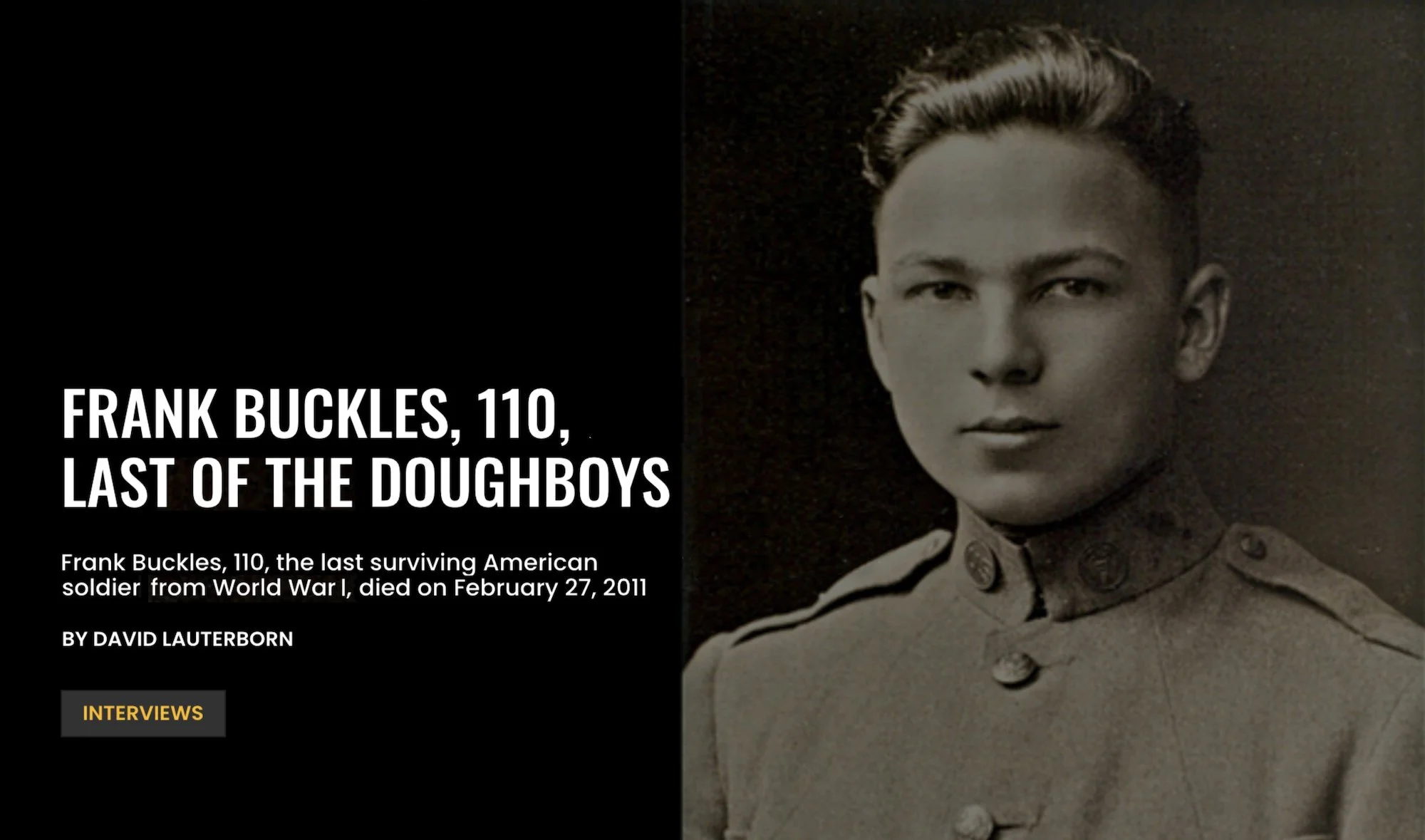
‘Frank Buckles, 110:
Last of the Doughboys’
By David Lauterborn
Military History, February 2011
Good history begins with curiosity and leads to discovery. How fortuitous to discover that a person representing the last connection to a storied generation lived just down the road.
Born in 1901, Frank Buckles lied about his age to enlist in the American Expeditionary Forces as a 16-year-old. The baby-faced doughboy served in Europe as a driver. As fate would have it, he would be the last surviving American soldier from World War I.
In 2008 we sat down in his West Virginia farmhouse to discuss the war, his more trying time as a POW in the Philippines during World War II, his postwar life and the secret to his longevity.
This 2011 online reprint of the interview announced his passing at age 110. Rest in peace, Frank.
Editor’s Letter
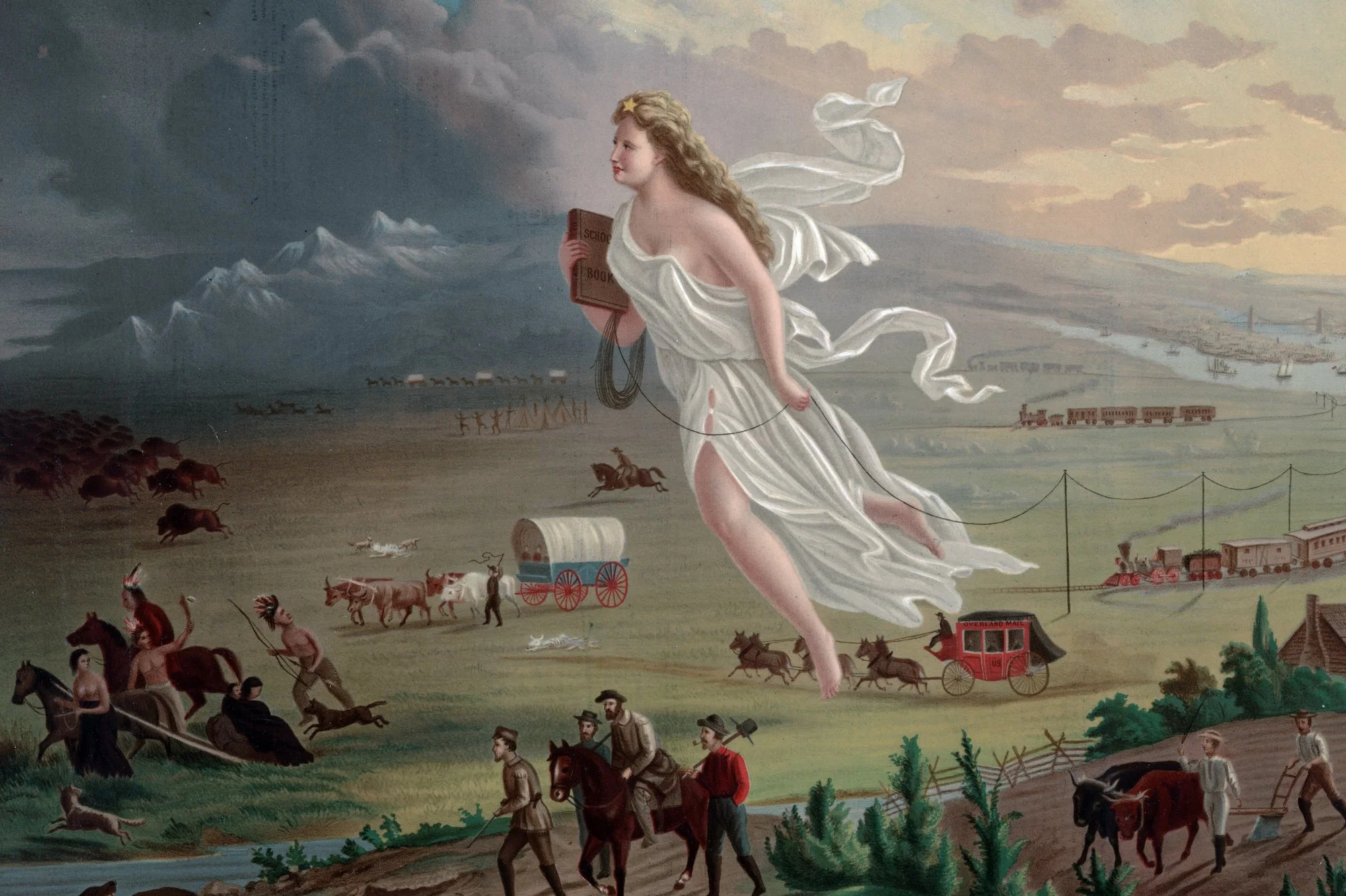
By Dave Lauterborn
Wild West, Spring 2024
An editor’s letter is usually the first piece of narrative writing a reader encounters in a publication. Each editor has his or her own way of approaching it. Most use it as a pitch, hyping the contents. Others treat it as a conversation with readers, perhaps playing off of the cover story or an overall thematic topic. The best do both.
I was the main subject of an editorial before writing one myself. Lee Walburn, the venerable longtime editor of Atlanta magazine, wrote of my dreamer’s decision to leave corporate publishing, move to the Caribbean and flirt with living aboard a sailboat. Ariel Melchior Jr., publisher of the Virgin Islands Daily News, gave this young copy editor his first chance to write a guest editorial — some fluff about fixing the island’s notoriously “holey roads.”
The one I share here was hard to write, as I knew it was likely my last as editor of Wild West after a richly rewarding 17-year span on staff.
‘The Times They Are a-Changin’’
Online Newsletters

By David Lauterborn
Military History, October 2023
Online newsletters have proven very useful for keeping readers invested in a publication’s curated content. The best newsletters tease to forthcoming articles, expand on themes in future issues and invite readers to participate in the conversation.
In this monthly newsletter for Military History I discussed the global nature of war and how in recent decades the potential field of human conflict has even spread into low Earth orbit, that zone of space from 100 to 1,200 miles above the planet’s surface. Today more than 80 nations operate 10,000-plus satellites in low Earth orbit. Many such devices are designed for espionage or combat. What was once the stuff of H.G. Wells fiction has become reality.
My thoughts were a precursor to an article in the Spring 2024 issue by Paul X. Rutz, who explored the history of satellite warfare from the 1957 Soviet launch of Sputnik to present.
‘The Future Battlefield’
By Dave Lauterborn
Wild West, August 2023
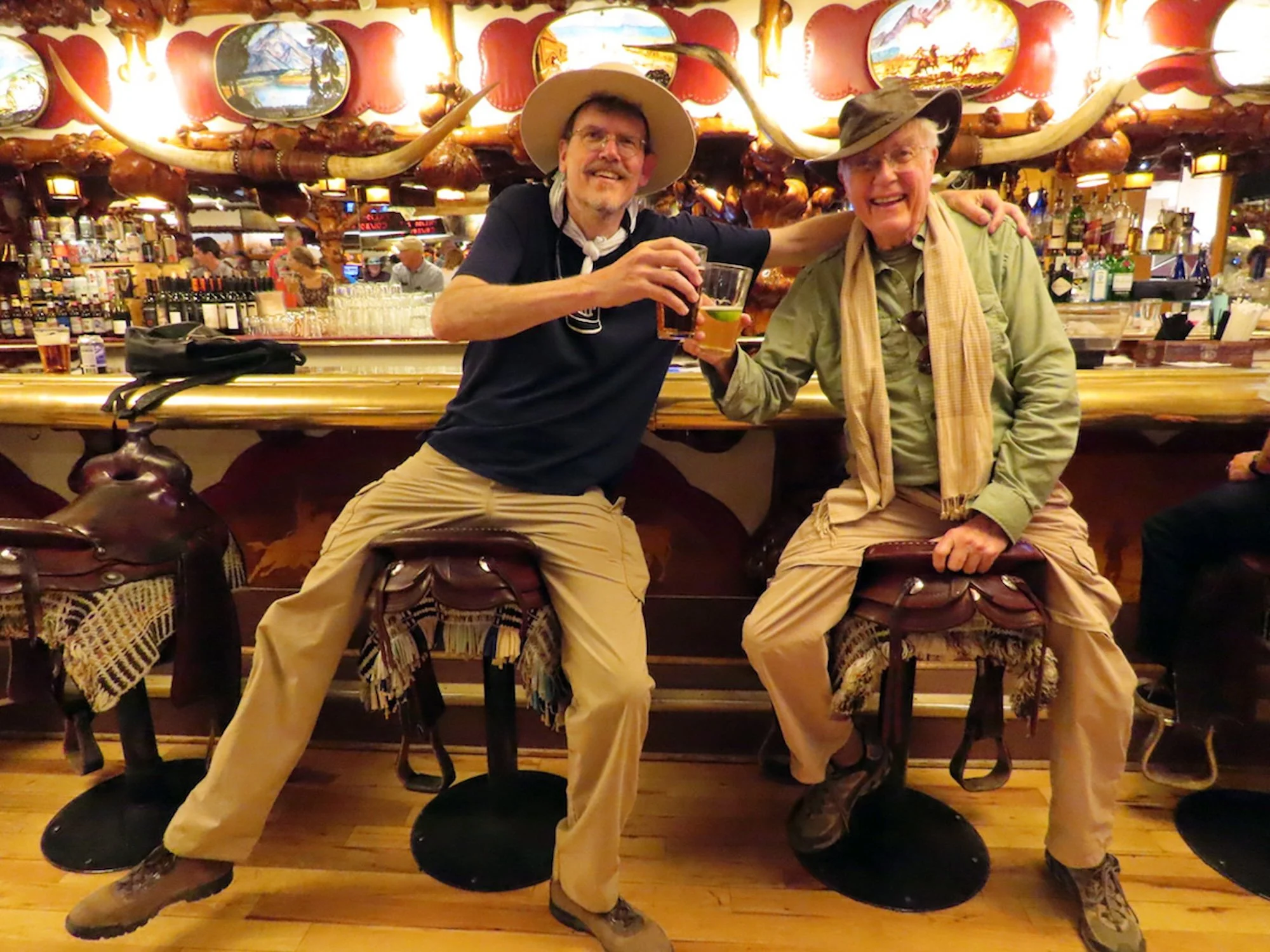
Having spent the better part of a decade editing and writing travel guides before making the leap into history publishing, I increasingly added historical sites to my own trip itineraries, including father-son treks. Pop (posing with me here at the Million-Dollar Cowboy Bar in Jackson, Wyo.) turned 90 in 2026, but he retains the fitness level and game attitude of someone decades younger. Our adventures out West have included hiking in Yellowstone and Grand Teton National Parks, four-wheeling in the Four Corners and touring gold rush sites along Alaska’s Inside Passage. My wife, Jill, and I lived in California for a time and have crisscrossed the West by car.
I featured some of our destinations in Go West, the back-page travel department I created for Wild West (see example below). Still, there’s nothing like standing in a spot where history was made, and in this newsletter I urged readers to do just that.
‘In the Footsteps of History’
Back Pages
By David Lauterborn
Military History, Winter 2024
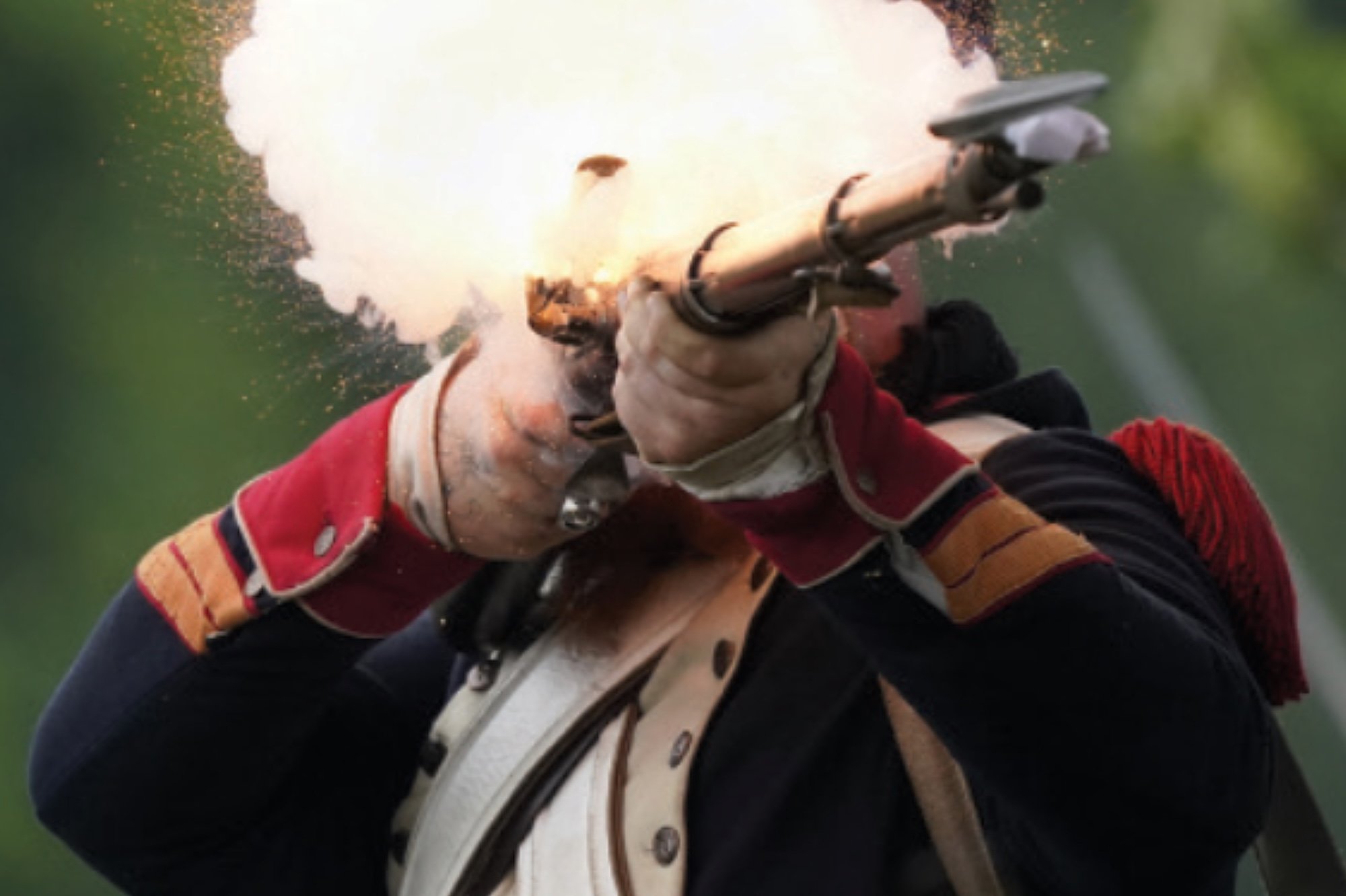
Captured was the final iteration of Military History’s back page, showcasing photos that eschewed oft-depicted subjects in favor of images that surprised, challenged or delighted readers. This frozen moment of a Napoleonic reenactor firing a musket was taken at such high speed that the wadding is visible emerging from the muzzle.
After reviewing the options provided by our photo editor, I chose this image, as it gave me a chance to write about the operation of a musket and the origin of a popular term. Our readers were taskmasters with regard to accuracy, and as lead fact-checker, I knew I’d need to nail the details on this one or face their wrath in the Letters section.
Those familiar with the operation of muskets might find the headline “Flash in the Pan” a bit obvious. But for the uninitiated, this Captured dramatically illustrates the origin of the term.
‘Captured: Flash in the Pan’
By Dave Lauterborn
Wild West, Spring 2024
The back page of a magazine is a publisher’s last chance to reach readers and, hopefully, whet their appetite for the next issue.
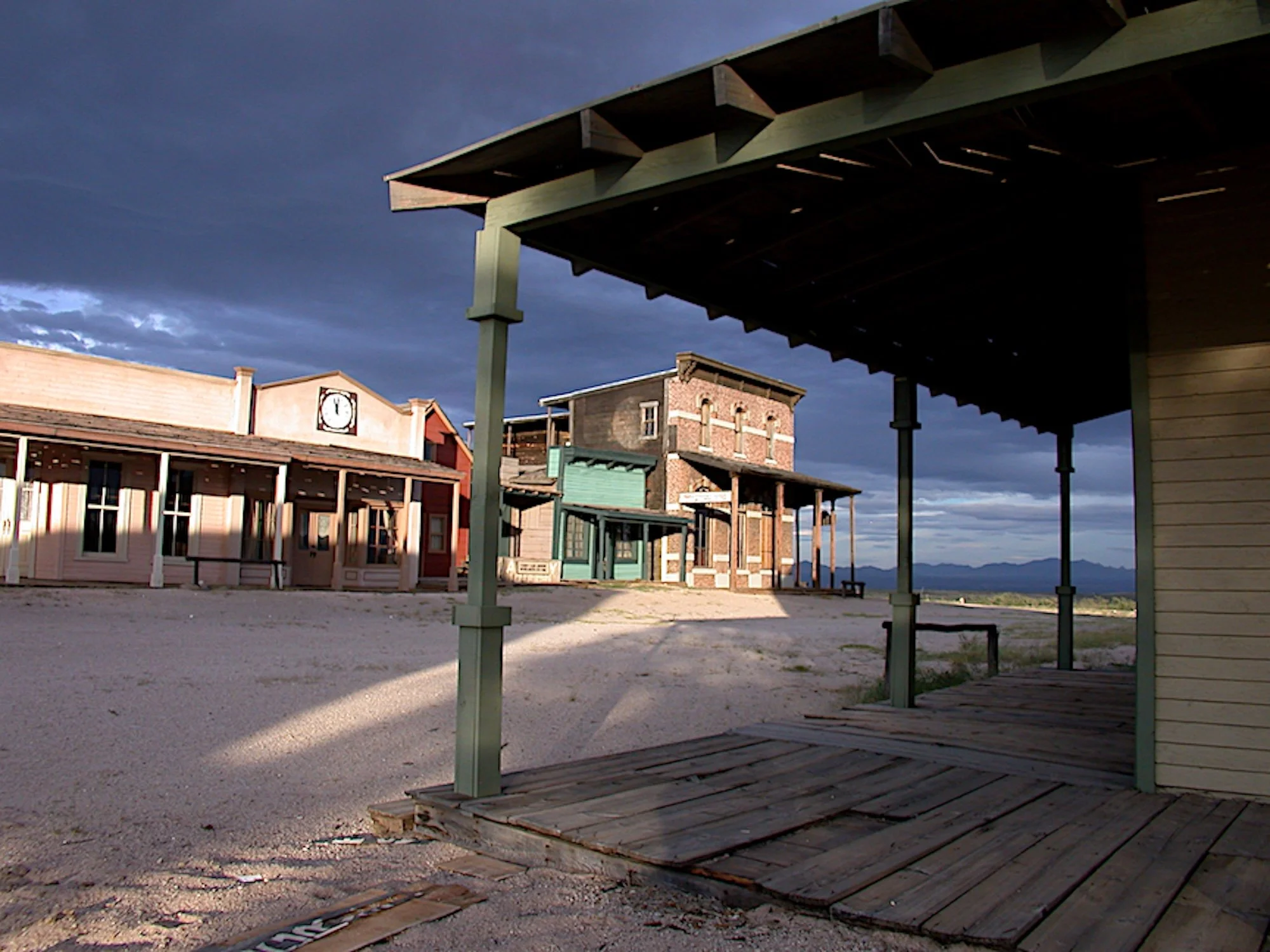
In 2010 the Wild West staff met to discuss a replacement for our existing back page, a stale showcase of Western-themed auction items. Drawing on my fascination with history and wanderlust, I suggested Go West. The goal was to prompt readers to visit the places we wrote about in the magazine. The page centered on a full-bleed image of a specific Western destination, with an inset photo either of that very locale from history or of people or objects tied to that place.
From 2010 until the 2024 close of Wild West I compiled and wrote all 82 profiles for Go West. This Spring 2024 write-up of the Mescal movie set, 45 miles southeast of Tucson, Ariz., was the last of our travelogues and features a photo I’d taken of that magical place.